
Palworld's Future: A Firm Stand Against Free-to-Play and the Path Forward
Palworld's steadfast buy-to-play model, a core design philosophy, powerfully rejects the turbulent free-to-play shift, ensuring a sustainable and player-first future for the creature-collection phenomenon.
In the ever-evolving landscape of the video game industry, where business models can shift as unpredictably as a rogue storm system, Palworld has anchored itself firmly to its original course. Recent murmurs in 2026 suggested a potential seismic shift for the creature-collection phenomenon, with whispers of a transition to a free-to-play model swirling through the community. However, the game's developer, Pocketpair, has acted with the decisive speed of a master tactician, swiftly dousing those rumors with a clear and unequivocal statement: Palworld will remain a buy-to-play title. This decision, rooted in the game's original design philosophy and a deep respect for its player base, charts a distinct path for the game's future, one that avoids the turbulent waters of live-service monetization in favor of a more traditional, content-driven expansion.
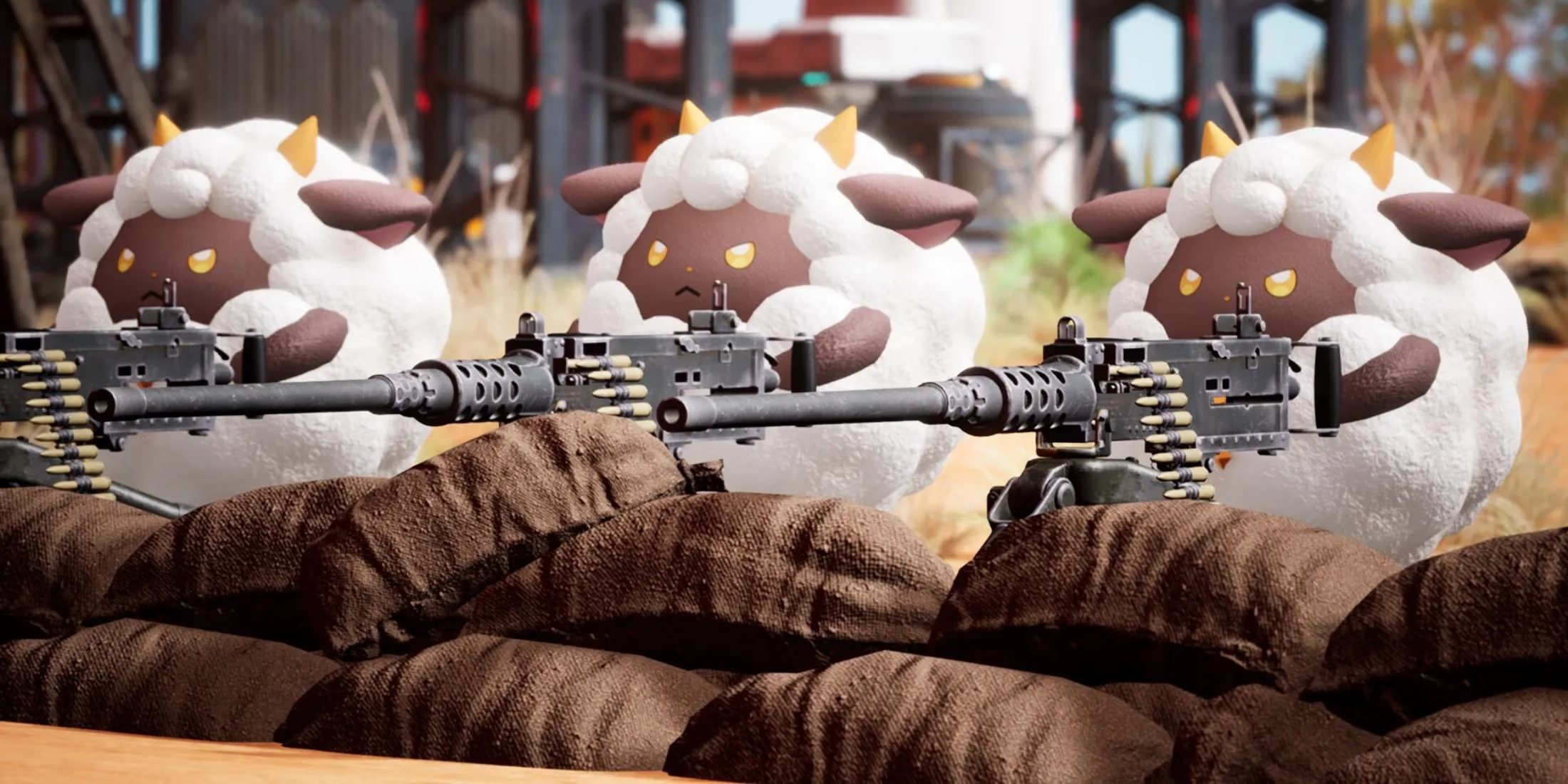
The journey of Palworld, often cheekily dubbed "Pokémon with guns," has been nothing short of a rocket launch into the stratosphere of gaming success. Its debut in early 2024 sent shockwaves through the industry, capturing the imagination of millions and achieving a staggering peak of over 2.1 million concurrent players on Steam—a feat that left even its creators at Pocketpair in awe. While the initial frenzy has settled into a steady orbit, the game maintains a dedicated and passionate community, nurtured by Pocketpair's commitment to regular content updates. The recent interview that sparked the free-to-play speculation was, as clarified by the studio, a snapshot from several months in the past. In a world where developer roadmaps can change as frequently as fashion trends, Pocketpair has taken a stand for consistency.
Why Free-to-Play Was Never in the Cards
Pocketpair's reasoning for rejecting the free-to-play and Games-as-a-Service (GaaS) model is multifaceted and reveals a developer intimately connected to its creation and its community:
-
A Design Philosophy Mismatch: The studio stated plainly that Palworld was "never designed to work under that model." Adapting the game's core structure, progression, and economy to suit a free-to-play framework would be, in their words, a Herculean task—like trying to retrofit a vintage sports car with the engine of a commercial airliner; the fundamental blueprints are incompatible.
-
A Player-First Promise: Crucially, Pocketpair emphasized that this model "isn't what our players want." This player-centric approach is the cornerstone of their decision. In an era where player goodwill can evaporate faster than a puddle in the desert, the studio is choosing to honor the trust of the community that purchased the game with a specific expectation.
-
The Path of Sustainable Growth: The goal for Palworld is to become "a long-lasting game that continues to grow." Pocketpair believes this growth is better achieved through meaningful content expansions rather than building a complex ecosystem of microtransactions and seasonal passes.
Charting the Course: Skins, DLC, and New Horizons
With the free-to-play question firmly settled, attention turns to what the future does hold for Palworld. Pocketpair has outlined a roadmap that focuses on enriching the existing experience:
| Planned Future Content | Description | Status |
|---|---|---|
| Paid Cosmetic Skins | Outfits and visual customizations for Pals and players. | Under Consideration ✅ |
| Paid Downloadable Content (DLC) | Substantial expansions potentially adding new regions, storylines, and Pals. | Under Consideration ✅ |
| Platform Expansion | Bringing the game to new consoles, most notably the PlayStation 5. | Highly Rumored/Expected 🎮 |
While no major DLC is "imminent," the confirmation that such expansions are on the table is exciting news for veterans. The potential arrival on PlayStation 5, long-rumored and hinted at through listings for events like the Tokyo Game Show, represents the single most significant opportunity for rejuvenation. For a game whose player count, while healthy, is no longer at its stratospheric launch peak, opening the gates to the vast PlayStation community could be the catalyst for a second wind. It would be like discovering a lush, uncharted continent full of new explorers, ready to embark on their own Pal-taming adventures.
As Palworld sails into 2026 and beyond, its course is clear. By reaffirming its buy-to-play foundation, Pocketpair is making a statement about value, integrity, and long-term vision. The studio is betting on the quality of its world and creatures to drive growth, supported by paid expansions that offer substantial new experiences rather than nickel-and-diming players. The journey ahead may not follow the crowded free-to-play highway, but by taking its own path—one paved with deliberate content and respect for its player-investors—Palworld aims to prove that sometimes, the road less traveled leads to the most enduring destinations. The community now watches, with anticipation, for the new lands and creatures that await over the horizon.