Palworld vs Nintendo: The 2026 Legal Showdown That Could Change Gaming Forever
Nintendo's 2026 lawsuit against Palworld creators over patent rights sparks a dramatic legal showdown in the gaming industry, raising questions of innovation versus corporate power.
Have you ever wondered what happens when a scrappy indie developer takes a cheeky jab at the most profitable media empire in history? Fast forward to 2026, and the answer is unfolding in a Tokyo courtroom in what could be the most consequential legal battle in modern gaming! Nintendo, after what many perceived as years of silent, predatory observation, has finally pounced, filing a major infringement lawsuit against Pocketpair, the creators of the global phenomenon Palworld. But here's the twist—the gaming giant isn't suing over the cute, creature-collecting concept everyone expected. No, they're wielding the ambiguous, often brutal weapon of "multiple patent rights." The question on every gamer's mind in 2026 is simple: Is this a legitimate defense of innovation, or a corporate Goliath trying to crush a creative David with legal technicalities?

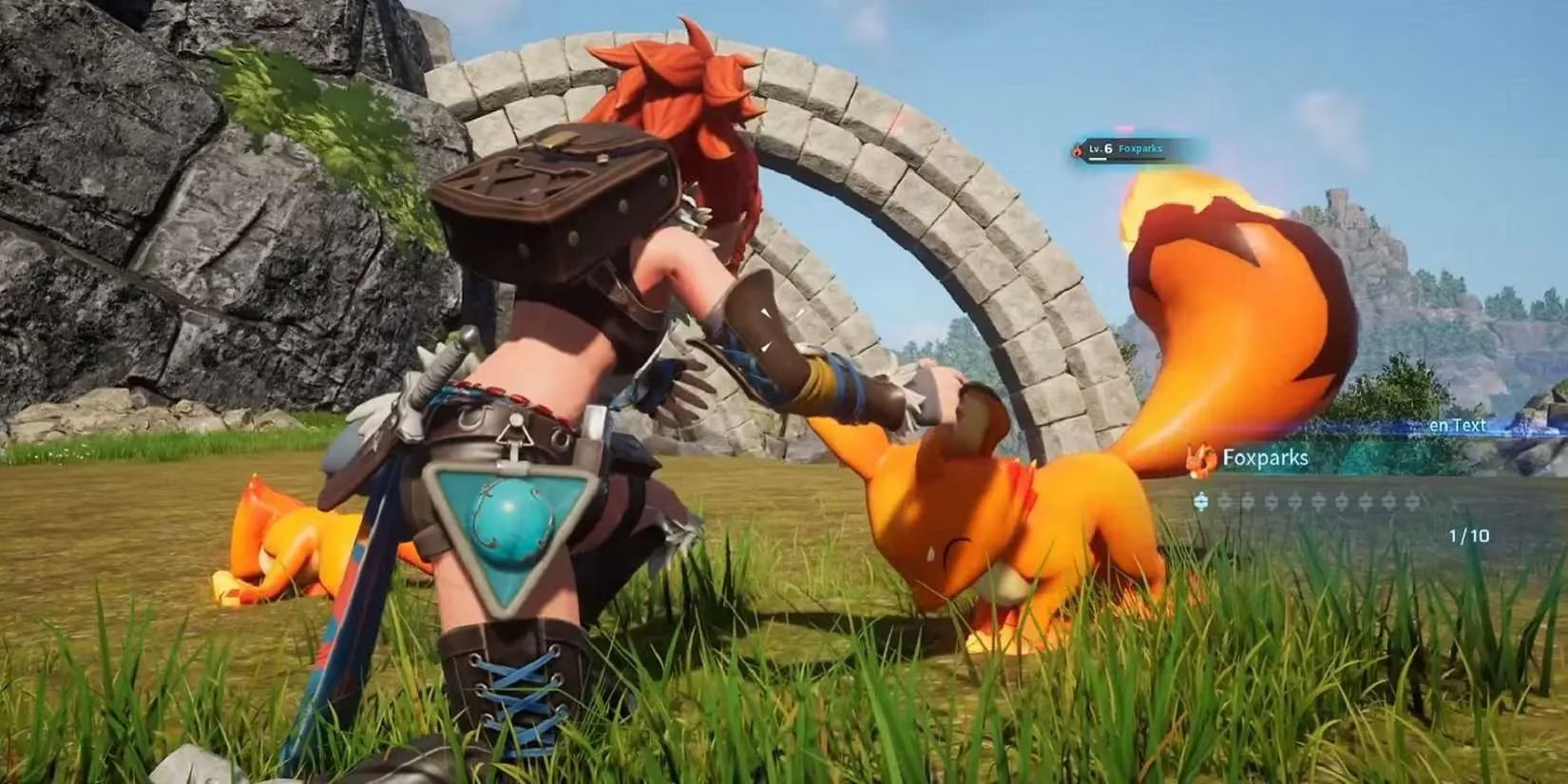
Let's be brutally honest: from the moment Palworld launched and promptly set Steam charts ablaze, its Pals bore an uncanny, almost shameless resemblance to certain iconic pocket monsters. Was it a loving homage or a blatant rip-off, the video game equivalent of that sketchy, off-brand toy you'd find at a discount store? The developers themselves openly praised their inspiration, but the internet had a field day memeing the sheer audacity of stuffing these adorable creatures into a world of guns, forced labor, and chaotic survival. Yet, in a stunning legal maneuver, Nintendo's 2026 lawsuit completely sidesteps the copyright and design comparisons that fueled the initial controversy. Instead, the complaint hinges on nebulous "patent infringements," leaving the entire industry scratching its head. What secret, patented gameplay mechanics could Palworld have possibly stolen?
🔍 Decoding the Legal Mystery: What Patents Are at Stake?
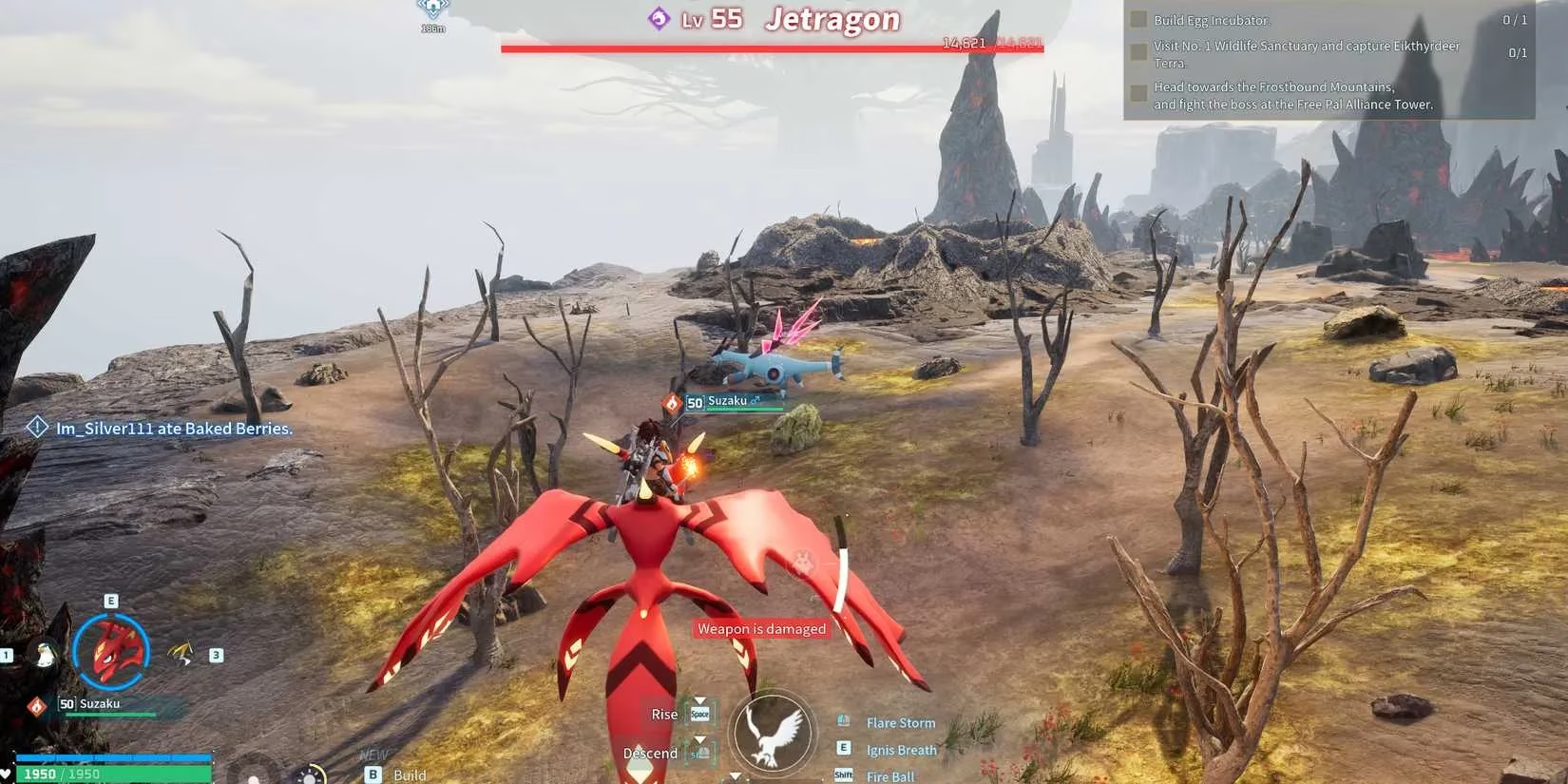
The core of this 2026 drama is shrouded in mystery. In their public rebuttal, Pocketpair dropped a bombshell: they claim they don't even know which specific patents they're accused of violating! This lack of clarity has turned the lawsuit into a high-stakes game of legal chess. Industry analysts and business lawyers have been quick to weigh in, and the consensus is surprising. Many legal experts argue that Nintendo's case on patent grounds appears remarkably weak. Why? Because when you strip away the surface-level creature designs, Palworld's core gameplay is a radically different beast. Let's break it down:
How Palworld Diverges from the Pokémon Formula:
| Feature | Pokémon (Traditional Titles) | Palworld |
|---|---|---|
| Core Combat | Turn-based, strategic | Real-time, third-person action with guns & melee |
| Base Gameplay | Creature collection, battling, story | Survival crafting, base building, automation, exploration |
| Capture System | Initiated battle → weaken → throw ball | Real-time aiming & throwing while exploring |
| Multiplayer Focus | Trading, battling | Cooperative PvE, shared base building, world exploration |
| Endgame | Completing Pokédex, competitive battling | Boss raids, factory automation, expansive exploration |
As the table shows, the overlap is minimal. While Pokémon Legends: Arceus experimented with a more real-time capture system, its combat remained firmly turn-based. Palworld threw the traditional rulebook out the window, creating a hybrid survival-crafting experience. So, what patented system could Nintendo possibly claim? The speculation in 2026 ranges from specific user interface elements to backend data management for creature collection. Without concrete details from Nintendo, the lawsuit feels less like a protection of intellectual property and more like a strategic attempt to drain a competitor's resources through lengthy, expensive litigation.
⚖️ The Court of Public Opinion vs. The Court of Law
In the court of public opinion, the verdict for 2026 seems clear: most fans and observers are firmly in Pocketpair's corner. The sentiment is overwhelming—Palworld may have worn its inspiration on its sleeve, but did it truly cross a line that hundreds of other creature-collecting clones haven't? The game's massive success is attributed not to copying a patented formula, but to boldly merging disparate genres in a way that resonated with players hungry for something new. Pocketpair's defiant statement framed the fight as a battle for the soul of indie development, vowing to resist so that "creative ideas" are not "hindered or discouraged." This narrative has galvanized a significant portion of the gaming community, who view Nintendo not as a defender of art but as a monopolistic bully. Are they using broad patent claims to stifle a competitor that dared to be successful with a provocative twist on a familiar theme?
🏛️ The Final Arbiter: Tokyo District Court
All the online debates and expert analyses lead to one unavoidable conclusion: the final decision rests with the Tokyo District Court. This isn't just a trial about two games; it's a potential landmark case that could set a precedent for how "inspiration" and "infringement" are defined in the interactive entertainment space. The possible outcomes are dramatic:
-
A Win for Nintendo: Could establish a dangerous precedent where broad gameplay patents can be used to limit creative expression, potentially chilling innovation across the industry.
-
A Win for Pocketpair: Would be hailed as a victory for indie developers, reinforcing that executing a popular concept in a novel, transformative way is not illegal.
-
A Settled Truce: The most likely, but least satisfying, outcome—a confidential settlement that leaves the legal questions unanswered but drains Pocketpair's coffers.
The stakes couldn't be higher. Is Nintendo protecting its legitimate inventions, or has it, as the old saying goes, "bitten off more than it can chew" in a futile attempt to litigate away a competitor's popularity? Only time, and the gavel of the Tokyo District Court, will tell. One thing is certain for gamers in 2026: we are all witnesses to a clash that will echo through the industry for years to come.