
Paying to Win: The eBay Market That Sells Palworld Progress
Palworld's eBay market sells maxed inventories, achievements, and shiny pals—paid shortcuts that let players skip the grind, risking accounts.
When Palworld entered early access in January 2024, it took less than a week for a strange secondary market to appear on eBay. Sellers were already offering maxed inventories, boosted stats, and even achievements for upwards of $40. The game was barely out of the gate, and yet some players had found a way to skip it entirely—by paying someone else to play. In 2026, that initial burst of listings reads like a time capsule, but it also captures a durable truth about modern gaming: where there is grind, there is someone willing to sell a shortcut.
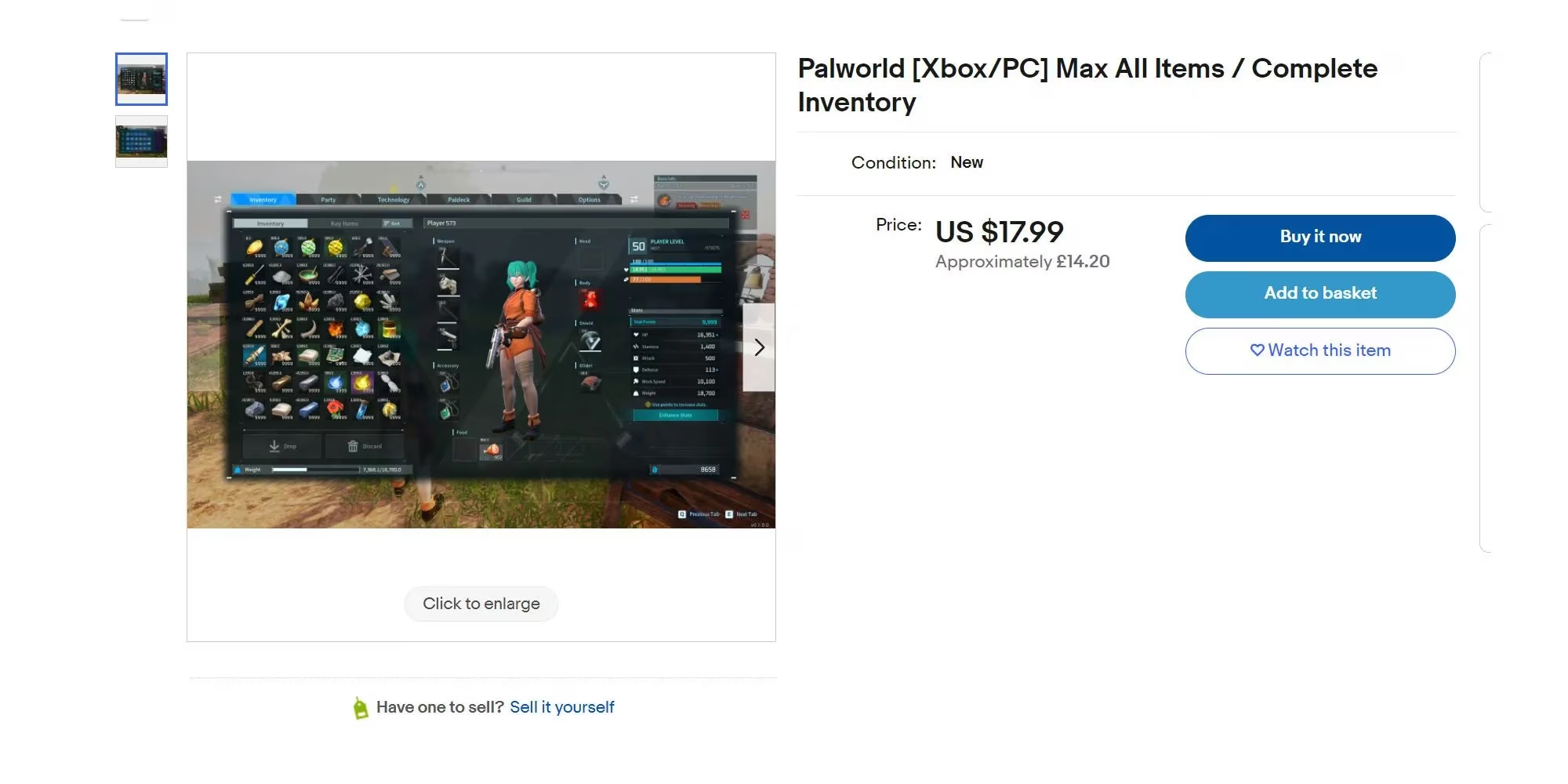
The listings worked in different ways. One seller, an achievement hunter, promised to play the game on the buyer's behalf, sending screenshots each time they 'finish a mission' so the buyer could 'check the veracity of your product.' Others handed over an account that already had the game, loaded with a save file containing an inventory full of every item. Some even offered to 'farm' shiny pals. The pitch was simple: pay to not play the game you bought. 🎮
| Service | Typical Price | Method | Risk Level |
|---|---|---|---|
| Max inventory & stats | Around $43.32 | Account access, likely cheats | High |
| Achievement hunting | $10–$440 | Seller plays for you | Medium to high |
| Shiny pal farming | Variable | Account access, possibly cheats | High |
| Pokemon Go shiny trades | £2–£14 | In-game trade | Low to medium |
One $43.32 listing promised to max all starting items to 9,999, along with stat, technology, and ancient technology points. The seller would also boost the buyer to level 50. However, they did this by accessing the buyer's account, and the delivery time—15 to 20 minutes, depending on whether the seller was awake—made it almost certainly a cheat-assisted service. It was risky, to say the least. Not every seller promised that the buyer would still be able to play online once the account was returned. ⚠️
This was not a Palworld-only phenomenon. eBay has long been full of sellers offering to play games for people, saving them the hassle of enjoying their favourite hobby. Looking through past listings, one could find purchasable Halo speedrun achievements, 100,000 gamerscore boosting, and max achievements on games like Cuphead and Dead Space. Prices ranged from $10 to as high as $440. Again, buyers were paying for the privilege of not playing the games they already owned.
Why would anyone do this? Is it laziness, lack of time, or the pressure to display a perfect profile? Maybe it is all three. In a culture where achievements and rare creatures are social currency, the end result can matter more than the journey. The eBay market simply follows that demand.
Shiny hunting was more unique to Palworld. Sellers offered to find any pal of the buyer's choosing once they paid, again by accessing the buyer's account. It was unclear whether this was done via cheats or regular old grinding, but given similar promises of 15- to 20-minute delivery times, the former seemed more likely. Pokemon Go had a similar scene on eBay, though not for shiny hunting. People listed shiny 'mons they already had and were willing to trade, ranging anywhere from £2 to £14. You really can buy anything on the internet. 🐾
By 2026, Palworld has changed. Updates, new pals, and community expectations have reshaped what counts as a valuable account. Yet the underlying market for shortcuts has not vanished. It has merely adapted. The same risks remain: account sharing violates terms of service, cheated saves can be wiped, and buyers may lose access to online play—or their accounts entirely. There is also the quieter cost: the experience of discovery, the thrill of a rare spawn, and the satisfaction of earning something are traded away for a receipt.
So what is actually being sold? Not just items or levels, but the illusion of accomplishment. The sellers of 2024 understood that. The buyers did too. And as long as games reward time and luck, someone somewhere will offer to skip the line—for a price.